Applied Development Protocols for Cultural Immersion

Each service RUNIX DATA LTD offers is defined as a documented protocol: a tested response to a specific client condition, producing a measurable and repeatable result.

VR Museum Tour App Heritage Digitisation Platform Integration Experience Analytics Content Design

Defined Inputs. Tested Methods. Practical Outcomes.

RUNIX DATA LTD structures all client engagements around a documented method library. Each method represents a repeatable, tested approach to a defined problem in VR cultural experience development. We do not invent a new process for each client. We apply the appropriate protocol, adapted to your specific collection, audience and technical environment.

Our methods cover the full lifecycle: from initial digitisation and content design through to VR application development, platform integration, quality assurance and ongoing analytics. They can be engaged individually or combined into a complete project engagement depending on what your institution requires.

All methods produce documented deliverables. Before any work begins, we confirm what you will receive, when you will receive it and what review rights you retain at each milestone. There are no surprises at project close.
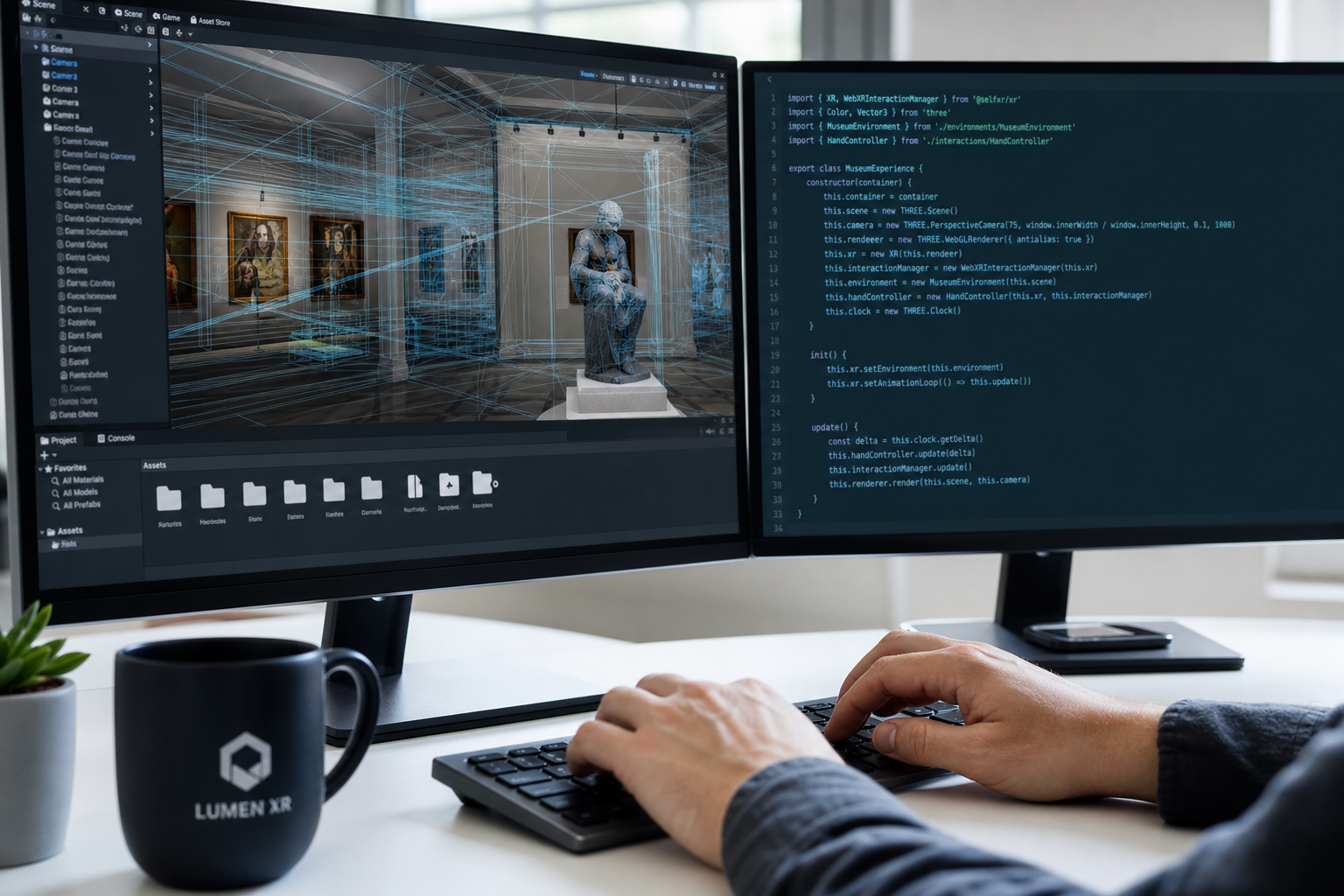
VR application development environment with museum scene and code

The Complete Method Library

Select any protocol to view the full specification including client conditions, applied methods, deliverables and measurable outcomes.

METH-01
Custom VR Tour Application Development

Full-cycle development of a custom VR tour application for a museum, heritage institution or visitor attraction. This is our core service and covers the complete path from spatial survey through to deployment, with all QA testing and documentation included.

Client Condition
An institution requires a custom VR tour application built to production standard for headset, mobile and web delivery.
Applied Method
Spatial mapping, scene architecture, interaction design, performance optimisation and cross-device QA testing with documented sprints.
Deliverables
Standalone VR build, web-based version, mobile companion app, full source documentation and 30-day support period.
VR Museum Tour App Virtual Sightseeing Platform Request This Protocol
METH-02
Immersive Content Design

Spatial narrative mapping, interaction architecture and audio-visual content production for VR cultural experiences. This protocol is appropriate when an institution holds digitised assets but requires an experienced team to structure them into a coherent immersive experience.

Client Condition
Institution holds collection assets but lacks the design methodology to structure them into a VR narrative with effective visitor interactions.
Applied Method
Spatial narrative mapping, interaction scripting, audio guide production, UI design and object-level annotation layer architecture.
Deliverables
Full content architecture document, interaction scripts, audio production files, annotation library and branded UI component set.
Interactive VR Experiences Immersive Cultural Experiences Request This Protocol
METH-03
Museum Platform Integration

API-led integration of VR tour capabilities into existing museum digital platforms, ticketing systems and visitor management infrastructure. This protocol ensures that new VR applications extend institutional systems rather than operating as isolated products.

Client Condition
Existing digital platform requires VR tour integration without disrupting current visitor workflows or administrative systems.
Applied Method
API integration, SSO configuration, CMS extension development and staff administration interface build with documentation.
Deliverables
Integrated platform with VR access controls, visitor analytics dashboard, staff CMS tools and full integration documentation.
Virtual Reality Tourism Platform Museum VR Development Request This Protocol
METH-04
Heritage Digitisation

Photogrammetric and LiDAR-based capture of heritage spaces and artefacts, producing high-fidelity 3D records suitable for VR deployment, archival preservation and academic access.

Client Condition
Heritage site or fragile artefact collection requires high-fidelity digital documentation for preservation and/or VR-ready asset production.
Applied Method
Photogrammetric survey, LiDAR capture where required, 3D mesh processing, texturing and archival-grade output with metadata tagging.
Deliverables
High-resolution 3D models, archival file package, VR-ready assets, metadata documentation and processing report.
Virtual Heritage Tours VR Travel Solutions Request This Protocol
METH-05
Experience Analytics

In-experience telemetry integration, spatial behaviour tracking and structured engagement reporting for deployed VR applications. This protocol provides the evidence base institutions need to justify investment, guide future development and report to funders.

Client Condition
Deployed VR application needs audience behaviour data to support investment justification, reporting and iterative improvement decisions.
Applied Method
Telemetry integration, spatial heatmap generation, session tracking and structured KPI reporting against agreed engagement metrics.
Deliverables
Analytics dashboard, monthly engagement reports, spatial behaviour maps and optimisation recommendations.
Virtual Sightseeing Platform VR Attraction Tours Request This Protocol
METH-06
AR Feature Development

Augmented reality layer development for use within physical museum and attraction spaces. AR features extend in-person visits with digital interpretation layers accessible via standard mobile devices, without requiring dedicated hardware.

Client Condition
Physical venue requires digital interpretation capability that works within the visit without requiring VR headset hardware.
Applied Method
AR marker development, spatial anchor placement, mobile-optimised overlay design and object-recognition interaction build.
Deliverables
iOS and Android AR application, marker assets, content management access and deployment guide for venue staff.
Interactive VR Experiences VR Museum Tour App Request This Protocol
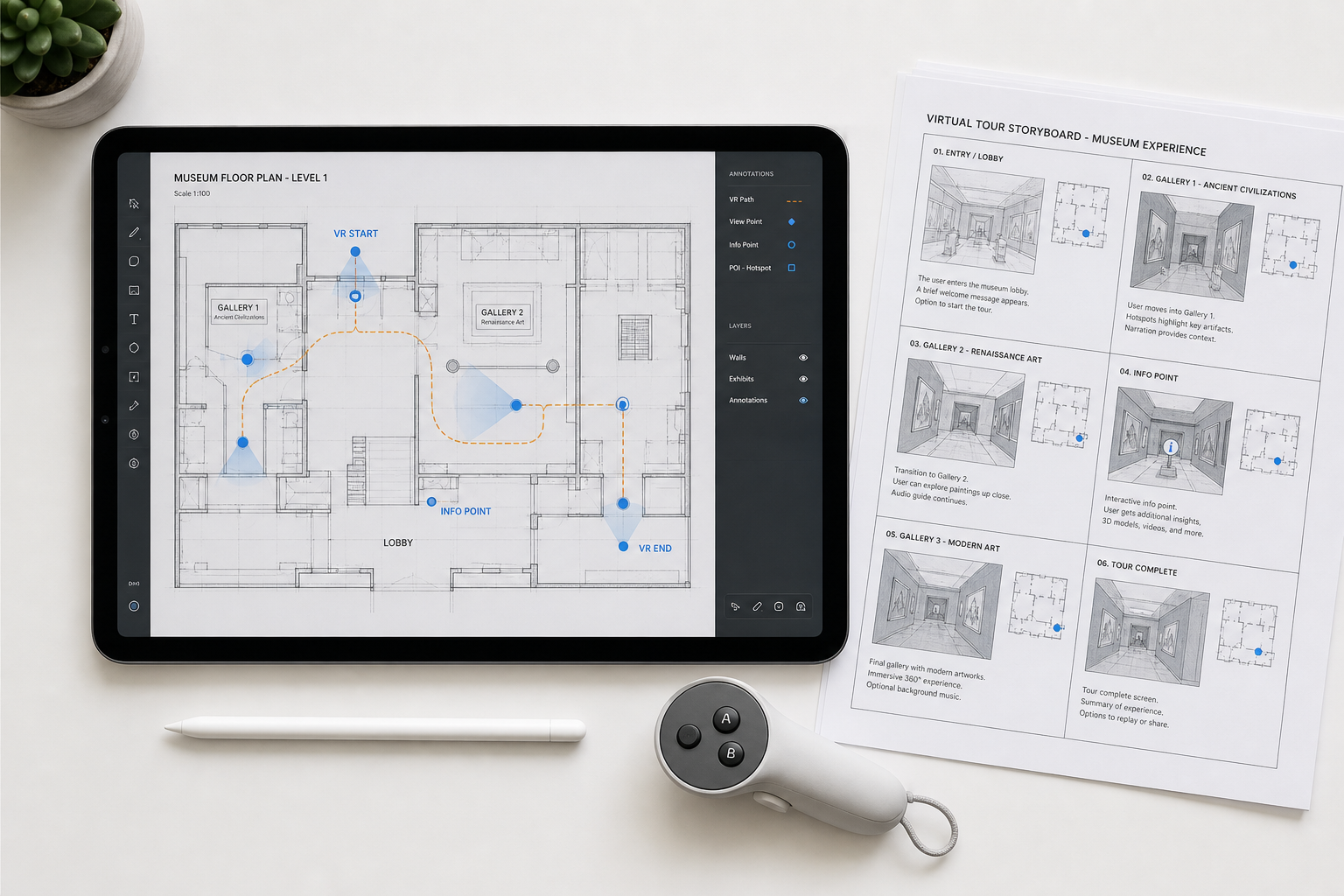
VR tour content design workspace with museum floor plans and storyboards

From Brief to Deployed Experience

All RUNIX DATA engagements follow a structured seven-step validation flow, from initial brief receipt through to post-deployment iteration. Each step is documented, has defined outputs and requires a confirmed client sign-off before progression.

This means every institution working with us knows exactly where their project stands at any moment, what has been completed, what is in progress and what comes next. The methodology eliminates ambiguity without creating administrative overhead.

Our average time from project confirmation to first QA-validated prototype is twelve weeks for a standard VR tour application. Complex integrations or multi-space digitisation projects are scoped individually with milestones agreed before work begins.

About Our Methodology

Frequently Asked Questions

Answers to the questions most commonly raised by institutions considering a VR development engagement with RUNIX DATA.

No. RUNIX DATA develops applications that operate across multiple device categories including standalone VR headsets, iOS, Android and web browsers. We can advise on appropriate hardware for your use case, but institutions are not required to provide or procure specific devices before engaging with us. We test across a standard hardware suite and confirm compatibility before delivery.

A standard single-space VR tour with content layer typically completes in ten to fourteen weeks from project confirmation. Multi-space applications, heritage digitisation components or complex platform integrations require a scoped timeline agreed at project start. We do not provide indicative timelines before reviewing a project brief, as scope variation is significant across institution types.

All applications are delivered with complete source documentation and a thirty-day post-launch support period. Full intellectual property is licensed to the institution on final payment, with no ongoing licensing dependencies on RUNIX DATA infrastructure. Institutions can choose to manage and maintain the application independently or engage us for ongoing analytics, optimisation and feature extension services.

Yes. We regularly work with institutions that hold existing 2D or 3D digitised assets. As part of our project scoping, we conduct an asset audit to assess resolution, format compatibility and suitability for VR deployment. Where assets require processing or enhancement, we include that in the project specification. We can also conduct fresh digitisation as a separate protocol if existing records are insufficient.

Yes. While our primary market is UK-based museums, heritage estates and attractions, we have delivered projects for international institutions. Remote project management is standard for some phases; on-site attendance for site survey and digitisation work is assessed on a project-by-project basis. All contracts are governed by English law regardless of client location.

We require institutions to confirm that they hold the appropriate rights to all collection materials incorporated into a VR experience before build begins. Our project specification process includes a formal IP and licensing checklist. RUNIX DATA does not assume responsibility for third-party content rights but will assist in identifying licensing requirements as part of the content audit stage.

Tell Us About Your Institution

Submit a brief describing your collection, your institution type and what you are trying to achieve. We will identify the appropriate protocol and respond within two working days.

No obligation · Response within 2 working days · Based in Tunbridge Wells, UK